
The Logic of Meadow Management
Wildflower meadows are not self-maintaining in the sense that garden borders are not self-maintaining. Left entirely uncut, most meadows in Poland gradually transition towards scrub: coarser grasses outcompete forbs, willowherb and dock become dominant, and within a decade the species-rich character is largely gone.
The once-yearly cut is the fundamental management action that keeps this succession in check. It mimics traditional hay-cutting, removing biomass and with it the nutrients that coarser vegetation needs to dominate. The timing and aftermath of that cut matter considerably.
This calendar describes a standard annual cycle for an established meadow in Poland's climate. In the first two seasons after establishment, some adjustments apply — these are noted where relevant and described in detail in the Establishing a Wildflower Meadow guide.
Spring: March to May
March
In most parts of Poland, March brings the thaw of the previous autumn's cut material if it was left in place (which it should not have been — see October below). Assuming the meadow was cut and cleared in autumn, March presents the first good opportunity to walk the site.
The purpose of the March walk is observational: note which areas have winter-bare ground (potential for new germination), where coarser grass has thickened, and where the early rosettes of key species — oxeye daisy, yarrow, field scabious — are visible. This informs decisions about whether any supplementary over-sowing is needed in specific patches.
March is also the last practical opportunity to re-sow any bare areas from the autumn's seed collection. Broadcasting seed over frost-opened soil gives reasonable germination rates on well-drained sites.
April
As temperatures rise above 7–8°C consistently, growth accelerates. Annuals such as cornflower begin germinating on disturbed ground. Perennials push new growth from established crowns. This is not the time for intervention: let growth proceed undisturbed.
If invasive species are present — creeping thistle (Cirsium arvense), common ragwort (Jacobaea vulgaris), or Japanese knotweed on peripheral areas — April is the best point to begin targeted removal before these species build significant root reserves for the season. Hand-pulling or cutting below the soil surface is more effective than cutting at ground level for thistles.
May
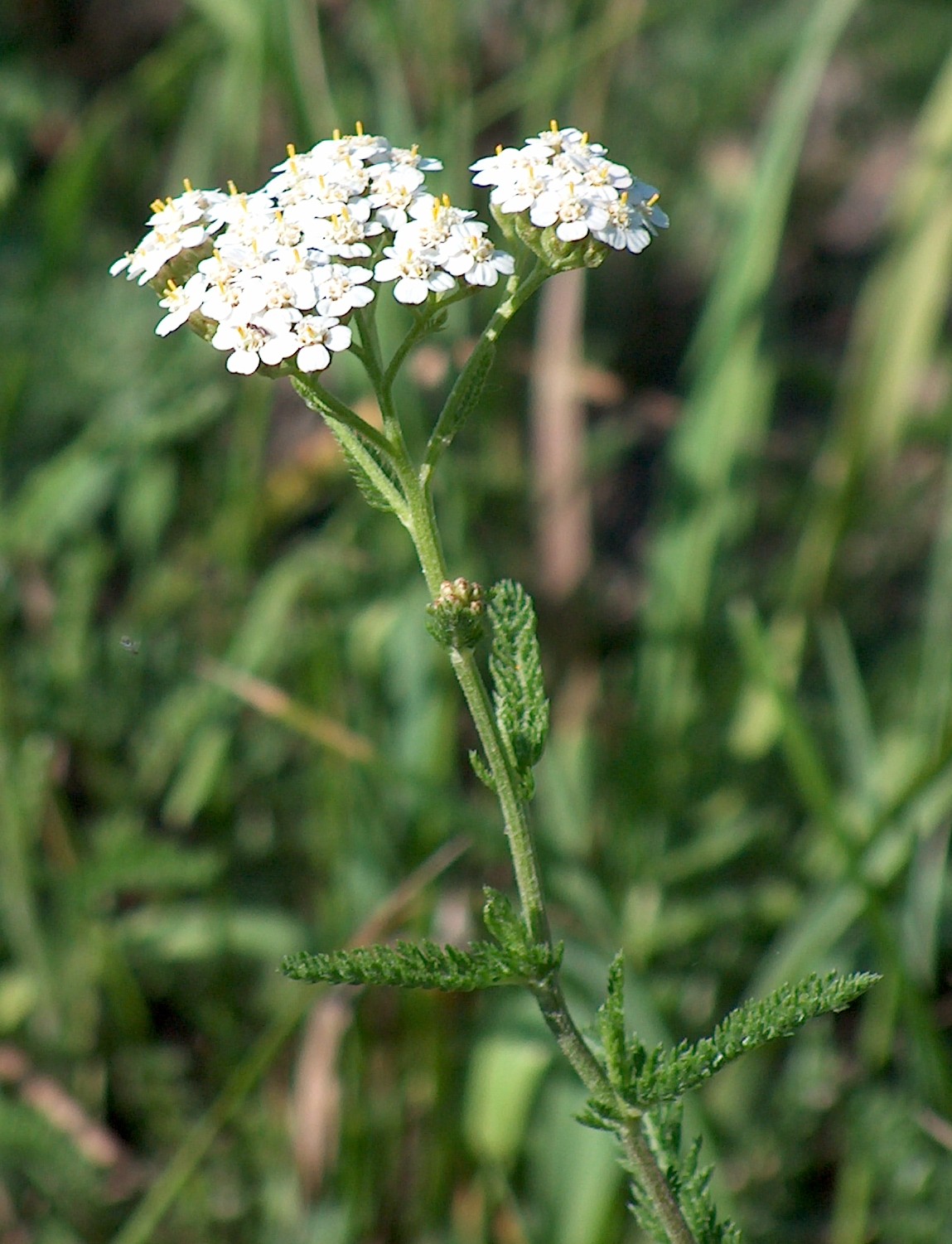
The meadow is growing strongly. In an established second-year or older meadow, this is the period of maximum vegetative development before the first flowering. Oxeye daisy, yarrow and self-heal typically come into bud by late May.
No cutting should occur in May. Foot traffic through the meadow should be minimal and on defined paths to avoid crushing developing flower stalks.
Summer: June to August
June and July
The peak flowering season. Cornflower, poppy and chamomile are prominent in June; oxeye daisy, field scabious and yarrow follow through July. This is the period for observation rather than action.
In June and July, note:
- Which species are flowering and self-seeding well
- Which areas are developing dense grass mats without forb coverage (these may need targeted intervention in late summer)
- Any aggressive expansion of docks or thistles, which should be spot-treated before seed set
- Signs of excessive dryness in specific areas that might indicate drainage differences across the site
The only cutting appropriate in summer is selective removal of problem species before they seed. A string trimmer can be used to cut individual dock rosettes close to the crown, removing the taproot tip if possible. All cut material should be removed from the site.
The summer months are for watching, not cutting. Premature mowing in July removes seed-bearing heads before seed set and progressively depletes the meadow's self-renewal capacity.
August
Later-flowering species continue through August: field scabious, knapweed and wild marjoram (where present) typically peak this month. The meadow's visual peak often comes in August when a range of heights and textures is present simultaneously.
Towards the end of August, begin assessing when the key seed-bearing species will complete seed set. This assessment determines the optimal cut date in autumn.
Autumn: September to November
September
September is the transition month. The last flowers of field scabious and knapweed should be allowed to complete seed set before cutting begins. On a typical Polish site this means the cut should not occur before mid-September at the earliest, and is usually optimal in late September to early October.
The timing can be confirmed by checking seed heads: the seed of oxeye daisy, knapweed and field scabious should be brown and pulling away from the head easily. If seeds are still pale and firmly attached, wait.
October: The Annual Cut
The annual cut in October is the single most important management action of the year. The objectives are:
- Reduce the standing biomass to prevent nutrient accumulation from decomposing material
- Open the soil surface to light, which stimulates germination of new seed
- Prevent aggressive grasses from building the dense thatch that excludes wildflower seedlings
Cut height should be 5–8 cm from the ground. Cutting lower risks damaging the crowns of perennials; leaving taller stems creates a thatch layer that blocks light to the soil surface.
Crucially, all cut material must be removed from the site within a day or two of cutting. If it is left to decompose in place, the nutrients it contains return directly to the soil, negating the fertility-reducing effect of the cut. Material can be composted elsewhere, used as mulch on productive areas, or disposed of off-site.
A rotary mower with a collection box is practical for smaller areas. For larger areas, a tractor-mounted topper followed by collection with a rake or buckrake is the standard approach. The surface after collection should look like a short, sparse lawn — brown, with soil visible in patches.
November
After the cut and clearance, the meadow requires no further management until spring. November is appropriate for recording observations: document the species composition from the season just completed, note any areas of concern, and begin planning any seed purchases or supplementary sowing for the following spring.
Any areas that showed persistent coarse grass dominance despite cutting can be treated in November by partial surface scarification with a garden rake to thin the grass and expose soil for overseeding in spring.
Winter: December to February
The meadow requires no management in winter. The cut surface will typically show rosettes of overwintering perennials and little else. Leaving the site undisturbed allows frost action to break soil surface structure, which improves seedbed conditions in spring.
Winter is the practical time for planning and sourcing. Orders for supplementary seed of specific species are typically better placed in December or January for spring delivery. The Native Wildflowers reference covers which species are suited to specific soil types and regions if supplementary species are being considered.
Summary Calendar
| Period | Action | Notes |
|---|---|---|
| March | Site survey; over-sow bare patches | Last opportunity for spring sowing on frost-opened ground |
| April | Remove invasives before seed set | Hand-pull thistle, cut dock below crown |
| May | No cutting; observe | Avoid foot traffic in growing areas |
| June–July | Observe; spot-treat problem species | No cutting of wildflower growth |
| August | Monitor seed set progress | Determine timing of autumn cut |
| Late Sept–Oct | Annual cut to 5–8 cm; remove all arisings | Wait until key seeds are ripe and pulling free |
| November | Record; scarify problem grass patches if needed | Plan seed purchases for next year |
| Dec–Feb | No action required | Source supplementary seed |
When the Meadow Declines
Even with correct management, most wildflower meadows show periodic patches of decline: areas where grass has thickened, where one dominant species (often oxeye daisy) has crowded out others, or where drought has created bare patches. These are normal fluctuations rather than failures.
Bare patches after dry summers are an opportunity to introduce additional species by direct over-sowing in autumn. Areas of grass dominance can be addressed with a scarifying rake applied firmly before the spring sowing season. Species composition naturally shifts over years — a meadow in its fifth year will look noticeably different from its second year, and both are appropriate for that stage of development.